Bruno's Road to Recovery With Non-Surgical Treatment

Case Study
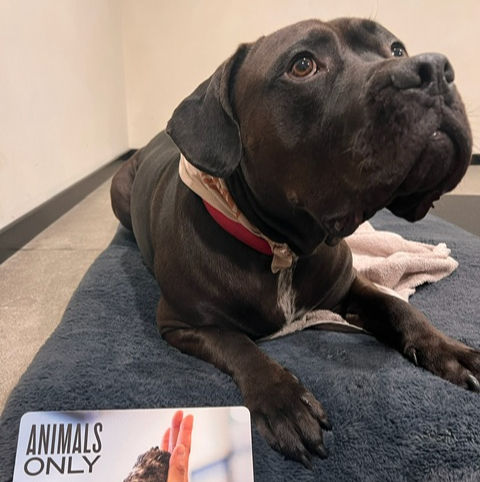
How Integrative Rehabilitation Helped One Dog Get Back to the Park
Diagnosis: Suspected cruciate ligament injury (left knee), Joint effusion, Small osteophytes (“bone spurs”) around the kneecap, Evidence of early arthritis
Services: Gym session, Weight management, Hydrotherapy, Targeted home exercises, Joint-support supplementation
The Initial Problem

Bruno presented with intermittent limping of his left hind leg that would flare after play sessions and improve with rest. Over time, the episodes became more frequent. Eventually, he reinjured himself during play, and the limping no longer resolved.
On February 17, 2025, Bruno was diagnosed with a suspected cranial cruciate ligament injury in his left knee, along with joint effusion (fluid in the joint) and early arthritic changes.
Cruciate ligament injuries are common in active dogs. Repetitive high-impact activity, age, weight, breed predisposition, and subtle instability over time can all contribute.
Initial Rehabilitation Evaluation (February 27, 2025)
During his first rehabilitation assessment, we observed:
Mild off-weighting of the left hind leg while standing and sitting
External rotation of the left hind limb
Generalized front leg tension
Knee swelling and instability
X-rays revealed:
Suspected cruciate ligament injury (left knee)
Joint effusion
Small osteophytes (“bone spurs”) around the kneecap
Evidence of early arthritis
Bruno’s family chose conservative, non-surgical management with structured rehabilitation.
Treatment Plan
Bruno’s parents were presented with both surgical and non-surgical options. After reviewing risks, recovery timelines, and lifestyle factors, they chose conservative management with structured rehabilitation. Bruno’s recovery wasn’t just about in-clinic sessions. His parents played a critical role and they committed fully.
Bruno’s integrative rehabilitation plan included:
Gym-Based Therapy: Targeted therapeutic exercises to rebuild strength especially in the knee stabilizing quadriceps and hamstrings muscles, improve joint stability, and enhance proprioception.
Hydrotherapy: Low-impact underwater treadmill sessions allowed Bruno to move and build muscle without overloading the injured knee.
Weight Management: Shed excess weight
Progressive home exercise program: Exercise restriction during early healing
He also received:
Monthly Adequan injections (a disease-modifying osteoarthritis drug that promotes cartilage repair and improves joint lubrication)
Daily collagen supplementation
Daily fish oil
What is Adequan? Adequan is a disease-modifying osteoarthritis drug (DMOAD). Unlike traditional pain medications that simply mask discomfort, Adequan works to actively treat the underlying joint disease by promoting cartilage repair and improving joint lubrication. This combination of rehabilitation therapy and joint-supportive medical management created a powerful, layered recovery approach.
Rehabilitation Goals
Our plan focused on four primary objectives:
Reduce Pain & Inflammation Calm joint irritation and create a foundation for healing.
Strengthen the Muscles Supporting the Knee Improve stability by building muscle to compensate for ligament weakness.
Support Weight Loss & Lean Muscle Development Reduce stress on the knee joint and slow arthritis progression.
Return to Safe, Normal Activity Longer leash walks, off-leash play, and improved confidence.
Recovery Timeline & Progress
Phase 1: Foundational Strength & Stability
Date: February 27 - Initial Checkup
Plan: Gym + Hydrotherapy 2x weekly for 6 weeks
Weight: 75.0 lbs
At this stage, Bruno:
Limping on the left hind leg
Knee swelling and instability
Difficulty weight bearing
Early arthritic changes
Mild off-weighting of the left hind leg while standing and sitting
External rotation of the left hind leg
Generalized front leg tension
The focus was muscle strengthening and knee stabilization. Building muscle around the joint helps compensate for ligament instability and protects the knee from further damage.
Phase 2: Increased Confidence & Reduced Frequency
Date: April 13 - Recheck
Plan Adjustment: Gym + Hydrotherapy 1x weekly for 8 weeks
Weight: 71.3 lbs
At this stage, Bruno:
Had increased energy
Was comfortable on longer walks
Showed no obvious limping
Demonstrated a comfortable walk and trot
Had resolved front leg tension
His program progressed with increased exercise challenges while gradually reducing session frequency.
Phase 3: Return to Play
Date: June 15 - Recheck
Plan Adjustment: Gym + Hydrotherapy every other week
Weight: 69.5 lbs
Bruno showed:
No obvious discomfort on longer walks
Comfortable off-leash play with other dogs
Stable left knee
No swelling or instability
Even weight bearing on both hind legs
From 75 lbs to 69.5 lbs, Bruno safely shed excess weight while building lean muscle—significantly reducing stress on his knee.
Movement Is Medicine
Check out Bruno featured as our "Best Friend Friday" in our IG where we feature our best friends daily.
Current Status
Today, Bruno is not just comfortable, he’s confident again.
Has no persistent limping or off-weighting
Has not needed pain medication for several weeks
Completes his home exercises 2–3x weekly
Plays at the park for 10–15 minutes regularly (up to 20 minutes on good days)
Recovers quickly after activity
Is leaner, stronger, and more muscular
Bruno is back at the park, playing with friends, and recovering quickly afterward. And perhaps most importantly, he hasn’t needed pain medication in weeks.
A Message from Animals Only
“Bruno’s recovery is a powerful example of how integrative, conservative rehabilitation can be effective for the right patients. Through structured therapy, hydrotherapy, weight management, Adequan support, and consistent home commitment from his family, Bruno avoided surgery and returned to the activities he loves. We are incredibly proud of Bruno, and deeply grateful to his dedicated parents, whose consistency and commitment made this outcome possible.”
Want to learn more about the services that Bruno received?


If your pet is showing signs of limping or knee discomfort, early intervention can make all the difference. Our team is here to help you explore all available options and build a plan tailored to your pet’s needs. Not every cruciate injury requires immediate surgical intervention. When addressed early and managed comprehensively, rehabilitation can:
Improve joint stability
Reduce inflammation
Slow arthritis progression
Restore strength and mobility
Protect long-term quality of life


Comments